
Most markets emerge. Europe’s green certificate market is being engineered: deliberately, structurally, and at speed. Backed by binding EU renewable energy targets, expanding Guarantees of Origin (GO) infrastructure, and mounting corporate disclosure pressure, what was once a niche compliance tool is fast becoming a strategic instrument at the heart of the energy transition.
For energy traders, corporate sustainability teams, and investors tracking the EU energy transition, the real question is no longer whether a green certificate market exists in Europe; it does. The question is how regulation, growth in renewable energy supply, and corporate procurement of renewables will collectively determine the price, liquidity, and long-term credibility of renewables.
Europe’s Green Certificate Market is Not Emerging. It is Being Designed.
Europe’s green certificate market is often described as though it were gradually taking shape on its own. It is not. It is being built deliberately through regulation, disclosure rules, decarbonisation targets, and procurement standards. This distinction matters because it changes the question. The issue is no longer whether a real market exists, but how policy will shape price, liquidity, and credibility in the years ahead.
Green certificates, most notably Guarantees of Origin (GOs), allow renewable electricity to be tracked, verified, and traded separately from the physical power itself. In practice, they have become part of the accounting infrastructure for Europe’s clean power claims, whether those claims are made by utilities, industrial buyers, or corporates facing growing reporting pressure and rising electricity demand from AI-driven operations.
The market case for these instruments rests on three primary forces: expanding renewable supply, rising compliance and disclosure expectations, and growing demand for credible proof of green consumption. Collectively, these forces are turning certificates from a niche compliance tool into a strategic market signal.

Supply is Expanding Fast
The first foundation of any certificate market is renewable generation. In Europe, that base already exists and continues to scale. Simply put, more wind, solar, hydro, and bioenergy mean more certified output, more certificate issuance, and greater market depth.
Renewable electricity generation in Europe is projected to reach roughly 2.19 trillion kilowatt-hours in 2026, with further growth expected through the decade. That matters not only for decarbonisation, but also for market structure. Every additional megawatt-hour of renewable output expands the pool of tradable certificates that can support compliance, disclosure, and corporate procurement claims. This projected growth reflects continued investment in wind, solar, hydro, and bioenergy across the EU, with the broader renewable energy market expected to continue expanding over the next several years.
In short, renewables are no longer peripheral to Europe’s energy transition. They are becoming central to it. As that shift accelerates, certificate markets are likely to gain momentum as well, because scale in renewable generation is directly linked to scale in green energy attribute trading.
Europe is producing the renewable volume needed to support a real certificate market. The next question is how demand evolves and how policy governs it.
Demand Is Locked in by Policy
The strongest force behind demand is regulation. The EU’s revised Renewable Energy Directive, RED III, sets a binding target of at least 42.5% renewables in the energy mix by 2030, with an ambition to reach 45%. This creates sustained demand for mechanisms that verify renewable consumption and support claims made by buyers across the economy.
Sector-level targets reinforce that direction. Buildings, industry, and transport are all under increasing pressure to decarbonise, and verification matters more as scrutiny rises. In this environment, certificates become less optional and more operational.
For example, according to Statista:
• Buildings are expected to reach a renewable energy share of 49% by 2030.
• The industrial sector must increase renewable energy consumption by around 1.6% annually.
This reflects a critical shift: regulation does not simply encourage renewables; it also creates demand for proof. As proof becomes necessary, certificate markets move from the margins to the core of the energy transition.
National Policy Adds Further Weight
EU-wide rules are only part of the story. Member states are also setting ambitious renewable targets of their own, reinforcing structural demand for systems that can certify renewable output and consumption credibly across borders.
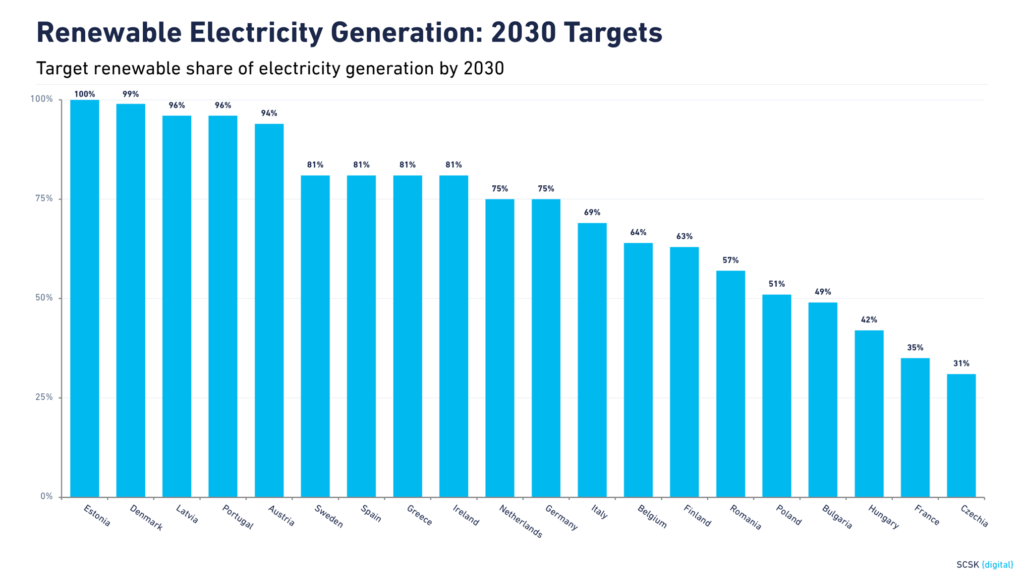
The illustration above of national targets shows a clear pattern: national ambition strengthens the market case for certificates by increasing the need for trusted tracking and verification at scale.
This further strengthens the case for green certificate markets. They are well placed to grow as governments translate climate ambitions into measurable obligations and market participants need auditable instruments to meet them.
Corporate Buyers Are Now Part of the Marketplace and Structure
Regulation is not the only source of demand. Large enterprises, including AI-driven companies, are also accelerating renewable procurement to meet statutory commitments, investor expectations, and reporting requirements. Because physical delivery and operational footprints do not always align, certificates provide flexibility to substantiate renewable claims across geographies and business units.
Corporate demand for green certificates is making the market more dynamic. What began as a compliance and disclosure instrument is now also a sourcing tool. It broadens the buyer base, increases trading relevance, and ties certificate value more closely to procurement strategy rather than regulation alone.
Market Infrastructure Already Exists
The EU does not need to invent a trading ecosystem from scratch. It already has well-established power markets, sophisticated energy traders, and mechanisms for handling environmental attributes. The more important shift is that certificates are increasingly being treated as part of a broader energy and carbon portfolio, alongside power contracts and emissions allowances.
What is Next for the Green Certificate Market?
The next phase will not be defined simply by more renewable build-out, although that will matter. In the near to medium term, it will be shaped by the balance between certificate supply, disclosure credibility, procurement sophistication, and regulation. That is why the recent weakness in Guarantees of Origin prices should be read carefully. Softer prices may reflect oversupply today, but they do not invalidate the long-term market logic.
Average carbon allowance prices in the EU Emissions Trading System (EU ETS) have risen significantly since the late 2010s as a result of tighter regulation and market reforms. Many long-term forecasts point to further increases through 2030 as the EU tightens emissions targets and expands the system’s scope.
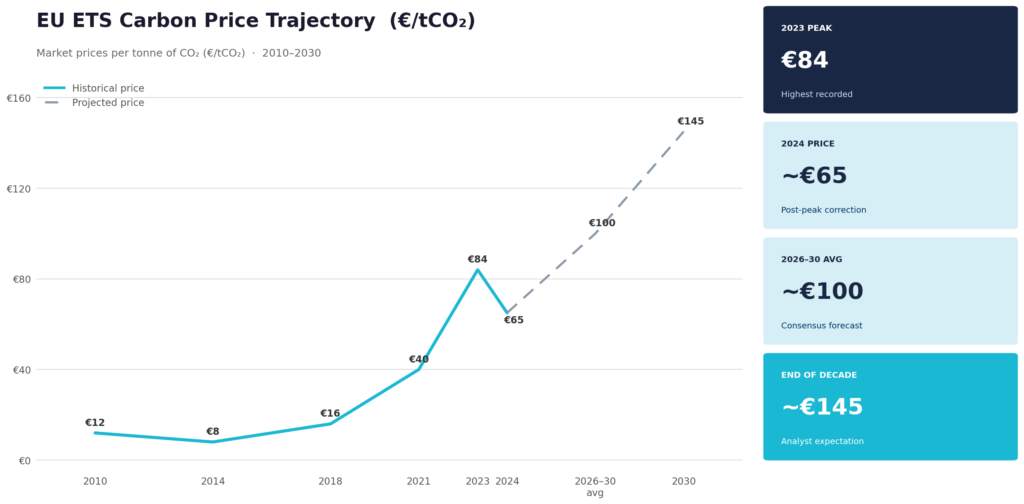
If anything, price weakness is evidence that certificates are becoming part of a real market rather than a symbolic one. Supply is responding to renewable growth, while demand is being shaped by regulation and procurement behaviour. As in any functioning market, price is reflecting the tension between the two.
Final Thought for Action
Europe’s green certificate market is real, but it is not purely market-made. It is policy-created, infrastructure-enabled, and increasingly corporate-led. That is precisely why it matters now.
The future of this market will depend not on whether certificates exist, but on whether Europe can keep tightening the link between renewable growth, credible claims, and investable price signals. In that sense, the market is no longer emerging. It has arrived. Policy and implementation will determine how powerful it becomes.
Author: Ardhendu Acharya, Principal Consultant