AI isn’t replacing marketers or websites. But it is changing what good looks like for both. Here’s what stood out from this year’s Technology for Marketing show.
Walk the floor at Technology for Marketing 2026, and one thing becomes clear quickly: the “what is AI?” conversation is over. This year, the talks moved on to harder, more practical questions. Does AI change marketing roles? Is it killing websites? And how do we actually know whether AI tools are finding and recommending us?
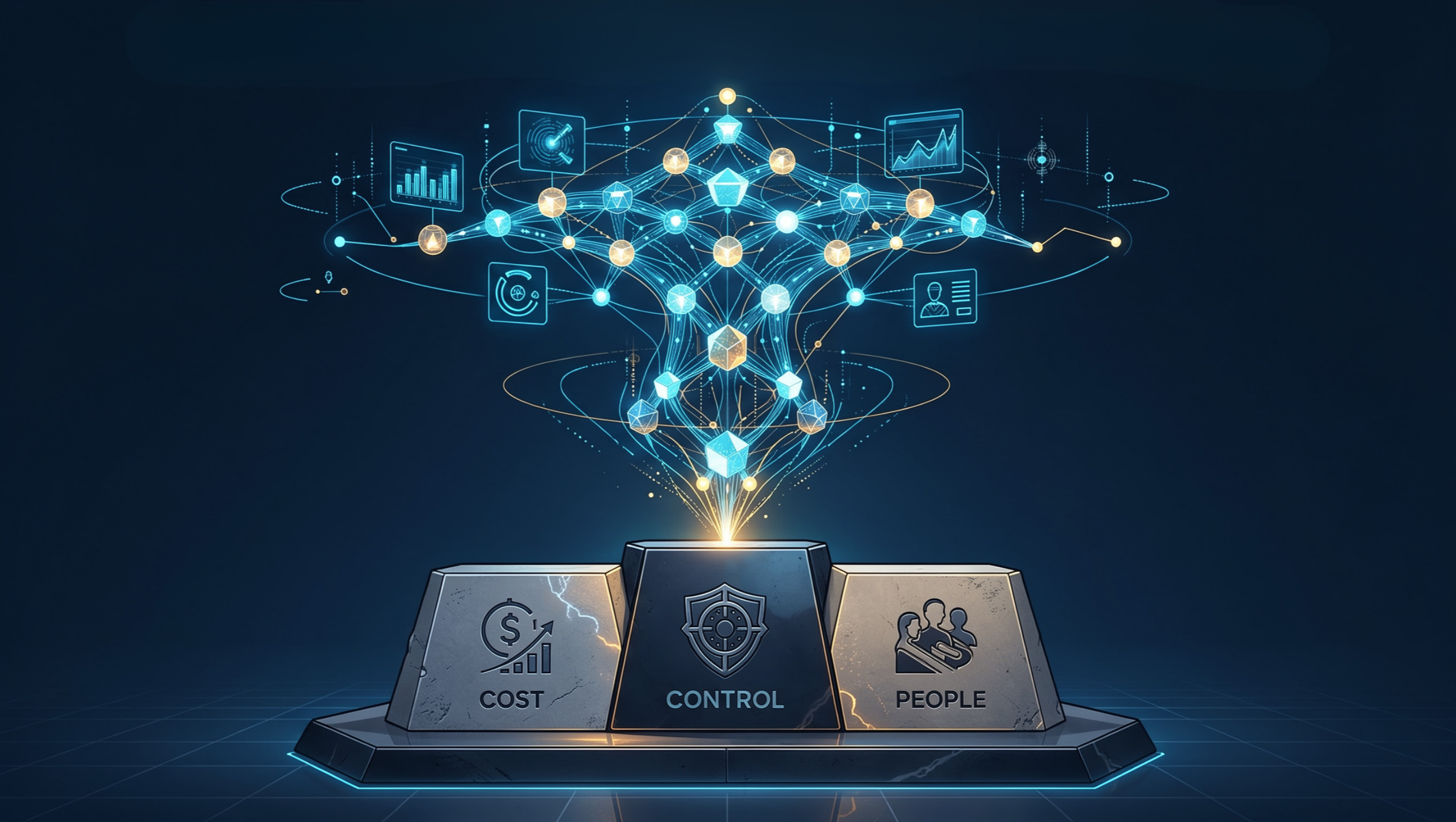
The sessions kept coming back to three big themes: the workforce, the customer journey and discoverability. Here are the highlights, two practical playbooks for AI search, and four takeaways worth acting on.
1. Workforce: Does AI Change Marketing Roles?
AI (still) needs human judgement
One of the most relatable stories came from Roman, a fashion retailer. Like many of us, they spotted a LinkedIn post claiming that a Claude agent could replace an entire SEO team. So, they put it to the test.
A couple of months later, the verdict was in: generic advice with no business context. Useful in places, but nothing a team couldn’t find anywhere else.
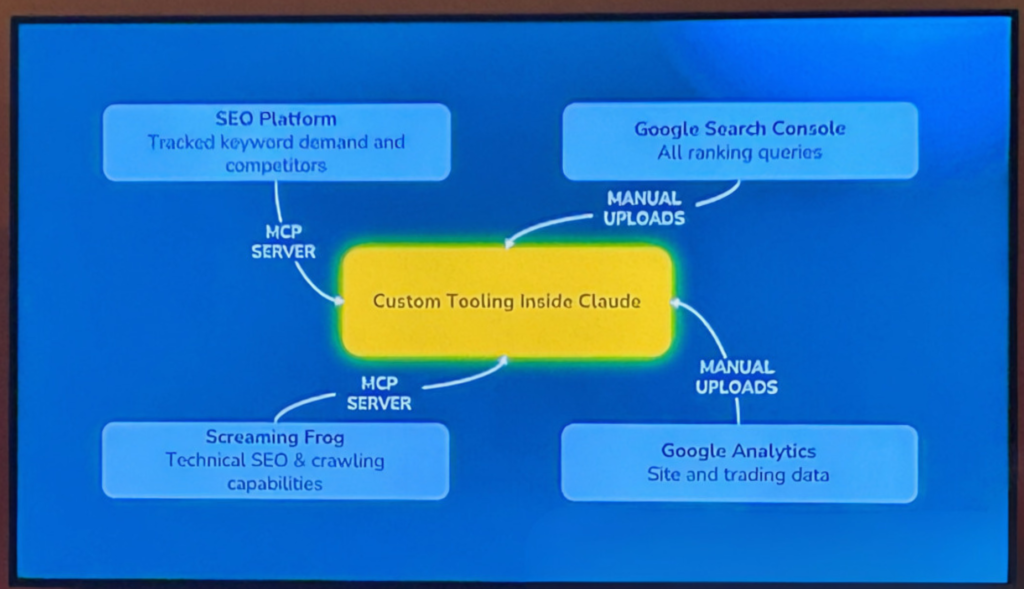
Rather than giving up, Roman changed approach. They built custom tooling inside Claude, connected through MCP* servers to their SEO platform and the Screaming Frog crawler, and fed it with data from Google Search Console and Google Analytics. Crucially, they used it for research and competitor checks rather than content production. People stayed in the loop, judging what was genuinely useful and creating the original content.
*API: a way for software to communicate with other software.
MCP server: a standardised way for AI agents to discover and use tools, data and APIs. MCP (Model Context Protocol) is designed to connect AI applications to external systems such as databases, APIs and business applications.
100 generic articles, but no original value
Weglot, a website translation tool, raised a question every marketer should be asking: are we producing content people can’t get anywhere else?
As search shifted towards AI, Weglot saw its metrics drop. Like many companies, its first response was to use AI to produce large volumes of content. It didn’t work. A hundred generic articles can still leave readers with nothing new to take away.
So, they shifted to sharing original insights only they could offer. They hosted an event, recorded it and shared the insights online. The cycle they described is simple: original research that only you can produce, experts who share it, citations that build up across articles, threads and AI answers, and finally, being found by both people and AI models. The result was more traffic to their website, with other experts citing the content.
One team, one shared outcome
Weglot also shared how they reorganised internally. SEO, paid, content, design and partnerships used to work as separate silos. Each team was doing more in its own lane, but those efforts weren’t joined up. Audiences were overwhelmed with too much content and too many messages, and all that extra activity wasn’t delivering better results.
Now, AI helps specialists work across those boundaries. With AI, everyone can do a bit of everything, so the team reorganised around one outcome: visitor engagement. One problem, shared ownership.
The bigger shift: expertise still matters, but it no longer defines the boundary of responsibility. That may be the most important workforce change of all.
2. Customer Journey: Is AI Killing Websites?
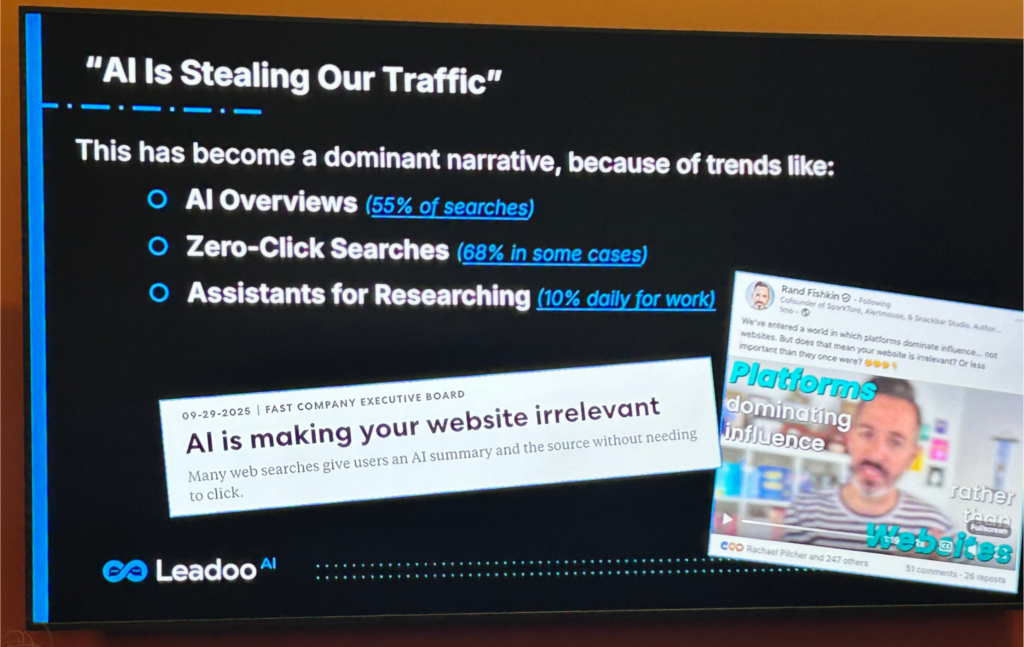
This was easily the most talked-about question at the show. The short answer? AI is taking some traffic, but that’s nothing new.
Marketers have been losing traffic for years
Long before AI answers, plenty of forces were already pulling traffic away from websites:
- Social platforms and news websites de-prioritising links
- Ad targeting options rolled back and rising cost per click (CPC)
- A cookie-less world and the rollback of analytics and attribution
- Zero-click search, where people get their answer directly on the search results page without clicking through to any website
- The “TikTokification” of attention and browsing habits
That last one deserves a closer look. TikTokification means shorter attention spans, more visual content (short videos, images and animation instead of long text), passive discovery through personalised feeds instead of active searching, and endless scrolling that’s less about finding something and more about consuming a stream.
Interestingly, one session made the point that reach didn’t die. Algorithms now drive most of what people see, including a large share of content from accounts they don’t even follow. Reach hasn’t disappeared; it has simply moved to where the algorithms are.
AI didn’t destroy demand. It destroyed patience for bad experiences
One point really stuck with me: the B2B buyer of the future is growing up with LLMs, and Google won’t automatically be their first stop. That’s less a claim that younger people never use Google, and more a warning about changing habits.
If buyers are used to asking a question and getting a useful answer instantly, a slow or generic website will feel frustrating. Without a conversational experience, brands risk losing them.
There was good news too. A session from Leadoo, a conversion and customer experience platform, showed that demand is still strong in both B2B and B2C. eCommerce revenue keeps growing, B2B buyers increasingly prefer to order online, and websites still heavily influence buying decisions. As they put it, we may be in a narrowing market for clicks, but a growing market for purchases inspired by websites.
A new website benchmark: CARE
So, what should a website deliver now? Leadoo offered a handy benchmark called CARE:

A few examples brought it to life:
- Society’s fast adoption of tools like ChatGPT shows just how familiar people have become with conversational interactions.
- A used-car dealership showed how a conversational approach can guide visitors to the right car, instead of leaving them to dig through page after page.
- Relevance was the part I found most useful. Someone shopping for shoes in Italy needs a very different journey from someone buying a T-shirt in the UK. A simple flow can ask visitors where they’re from and what they need, then guide the next step.
So for me, the message was clear: websites aren’t dead, but they need to work a lot harder to meet rising expectations.
3. Discoverability: What Changed in AI Search?
Over the past year or so, terms like SEO*, GEO and AEO have become part of the marketing vocabulary, along with the big question: will AI find and recommend our business? This year, the conversation became much more practical. How do we improve our visibility, and how do we know whether it’s actually helping customers find us?
*SEO is search engine optimisation. GEO is generative engine optimisation, which is about being visible in AI-generated answers. You may also hear AEO (answer engine optimisation) or LLM SEO. The labels overlap, but the goal is the same.
GEO is not SEO, but it builds on it
One session neatly explained the difference. Traditional search takes a query, scores existing pages and ranks them. With millions of pages competing, it can tolerate some noise. An LLM works differently: it takes the query, adds context and learned patterns, and generates a new answer. Because LLMs are predictive, they reward consistency. If your messaging is mixed, AI has a harder time working out who you are.
That said, Google’s advice is that SEO fundamentals still matter for its AI features. So, this isn’t about starting from scratch. It’s about building on the search foundations you already have.
This year: AI visibility is measurable
AI answers aren’t new. What has moved on is the guidance and our ability to measure visibility. In February 2026, Bing launched an AI Performance preview showing how often content appears as a source in answers across Copilot, Bing and selected partner services. That gives businesses a clearer view of which pages support AI answers, although it doesn’t cover every AI platform or tell you whether a citation led to a sale.
Good practice now: a consistent brand with evidence
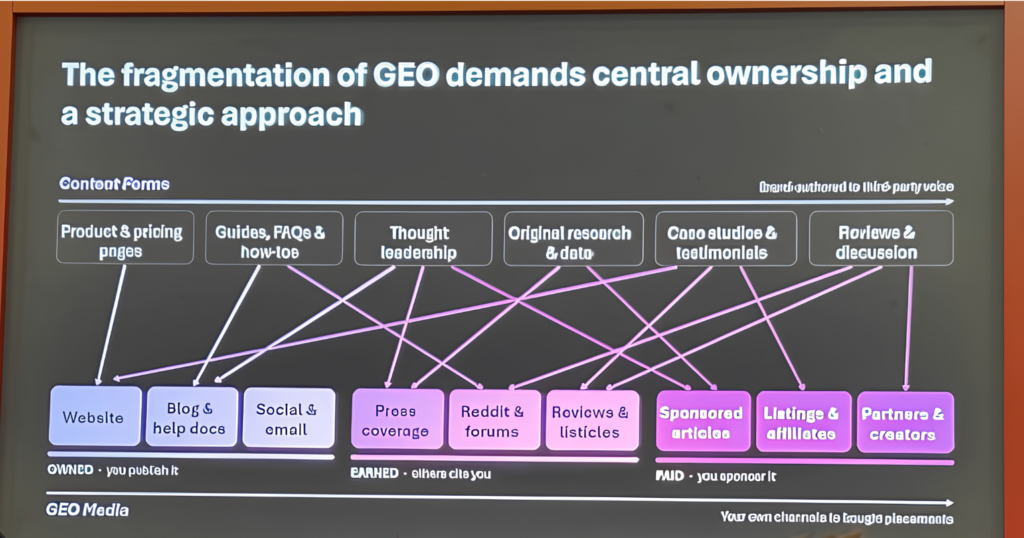
“GEO starts with brand” was a recurring message. Say the same thing about your brand in every channel and every document, and protect the trust that consistency builds. One session showed just how fragmented this has become: AI draws on your own website, blog and social channels, but also on press coverage, Reddit and forums, reviews, listicles, sponsored articles, affiliates and creators. That’s why GEO needs central ownership and a strategic approach, not scattered effort.
- Be consistent. Explain clearly who you are and what you offer, then reinforce those same facts across every channel. Regular LinkedIn posts are an easy way to share your expertise consistently.
- Be original. Publish expertise worth citing. Your own insights and experience give people something worth referencing; more generic content adds very little.
- Test the questions customers actually ask. Cover broad research questions as well as the specific ones people ask when choosing a supplier, including location and needs. Repeat those tests and check whether AI mentions you, cites your content and describes you accurately. Keep tracking qualified enquiries alongside this. One answer is just a snapshot, as results vary by model and personalisation.
Playbook: B2B visibility in AI search
For B2B brands, another session shared a clear five-step approach to understanding and improving AI visibility:
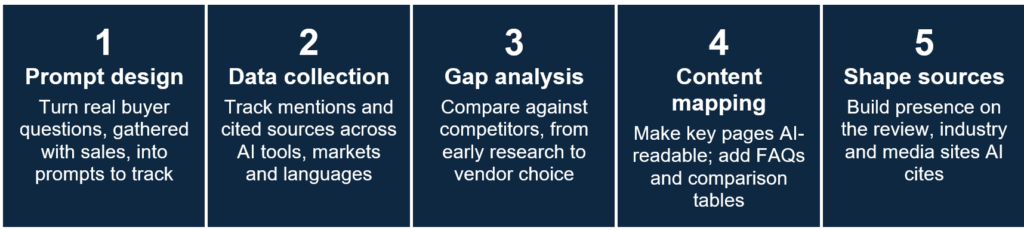
A few insights stood out:
- Benchmark against competitors. Track how often AI tools recommend you compared with competitors, market by market.
- Global doesn’t mean local. AI answers vary sharply by country and language, so a global strategy doesn’t guarantee local visibility. Test in local languages as well as English, since English searches can favour US competitors.
- Niche sectors have their own sources. In specialist B2B markets, industry sites are often the main sources AI relies on. Use citation data to find the ones that matter in your sector, then focus PR and content there.
Four Takeaways to Act on
Pulling it all together, here’s what I think businesses should do differently:
- AI supports the team. People own the judgment. Use AI for research and repetitive analysis, but keep strategy and quality under human ownership, with shared responsibility across marketing teams.
- Original expertise deserves more investment. One session placed thought leadership at the top of a new messaging pyramid for the AI era, built on proof points, reasons to believe, benefits and a clear value proposition. Give experts time to publish insights and evidence others can reference, repurpose your strongest work, and build credible external coverage and reviews so evidence about your business exists beyond your own website.
- Search visibility now includes AI answers. Keep brand messaging consistent across channels. Regularly test buyer questions, including vendor choice and location, in the languages your customers use. Review AI mentions, citations and accuracy alongside qualified enquiries. These checks reveal patterns; they don’t guarantee that an AI tool will recommend you.
- The website needs to answer back. Help visitors ask questions, find relevant answers and take the next step. Judge success by enquiry quality, conversions and customer feedback, not traffic alone.
Conclusion
Technology for Marketing 2026 made one thing clear: AI is raising the bar, not lowering it. Generic content, siloed teams and static websites are easier to replicate and easier to ignore. The winners will be the brands that bring real expertise, stay consistent everywhere AI looks, and make every interaction feel relevant.
The tools have changed. What makes marketing valuable hasn’t.
Author: Asena Atilla Saunders, CX & Digital Marketing Consultant