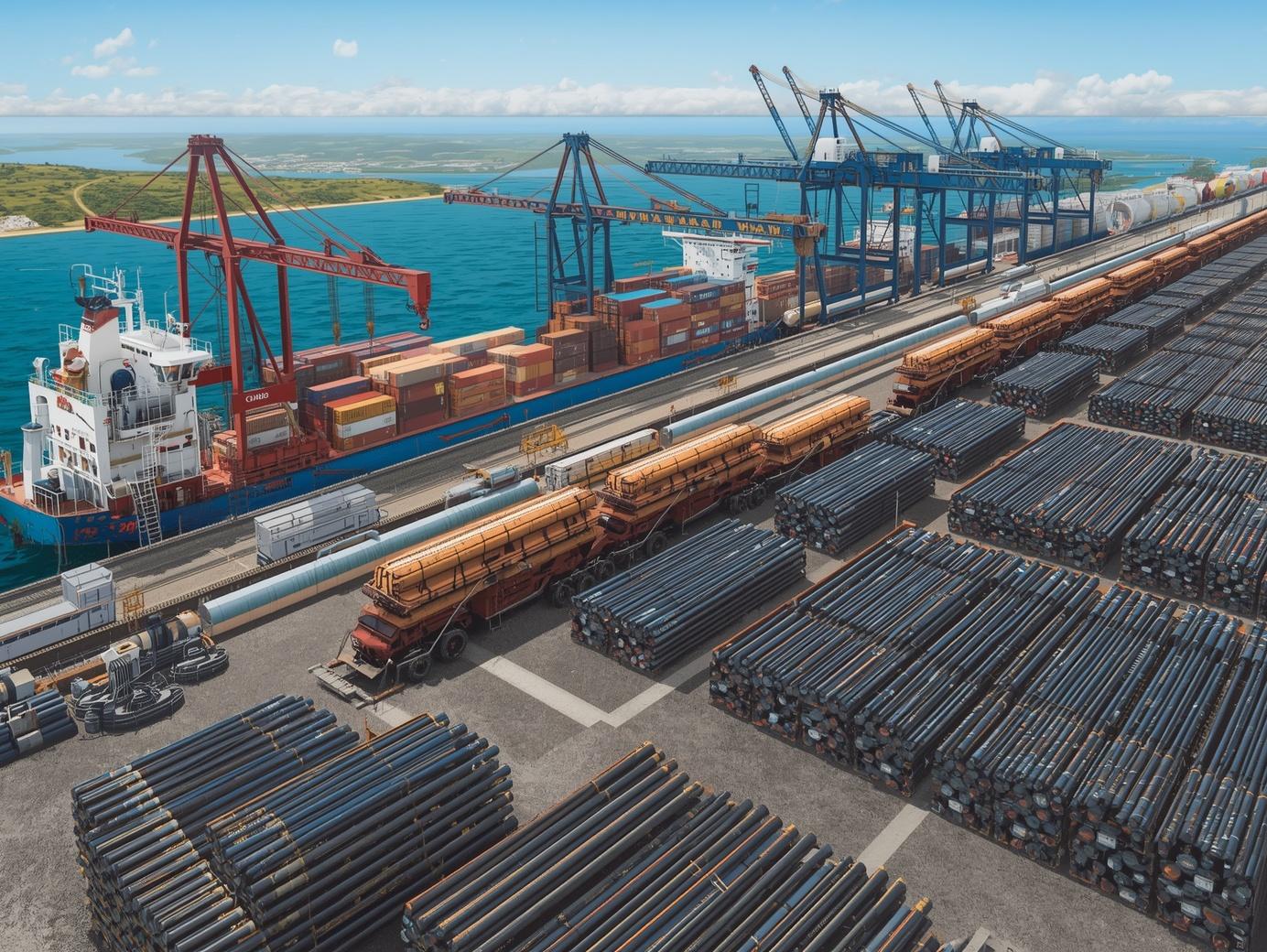
In many industrial supply chains, optimisation has traditionally meant improving efficiency within existing constraints. Inventory levels are adjusted, logistics are refined, and forecasting is incrementally improved. This model has worked for decades, particularly in complex global commodities where uncertainty is high, and responsiveness is critical.
However, in the OCTG (Oil Country Tubular Goods) business, these assumptions are being fundamentally reshaped by AI. What is changing is not the physical flow of goods, but the quality, speed, and scope of decision-making across the supply chain.
For integrated trading companies, this shift represents more than an operational upgrade. It signals a transition from managing supply chains as linear processes to designing them as data-driven decision systems embedded in customer operations.
Why Inventory Has Always Been Unavoidable, and What is Changing Now
In the OCTG business, any disruption in drilling or production can lead to significant economic losses for exploration and production (E&P) companies. Operating conditions are highly time-sensitive, and materials must often be delivered on a just-in-time basis, where even short delays can have a material impact.
As a result, the industry has historically relied on large safety inventories placed close to customer operations. This buffer-based model has been essential to absorb uncertainty and ensure continuity of supply.
At the same time, demand planning is shaped by multiple layers of volatility, including:
• Geopolitical instability
• Oil and gas price fluctuations
• Shifting drilling activity and well design changes
• Consolidation among E&P companies
• Rapid changes in production plans
Under these conditions, inventory has traditionally functioned as both a risk management tool and a service enabler. What is changing today is not the physical model itself, but the decision layer behind it.
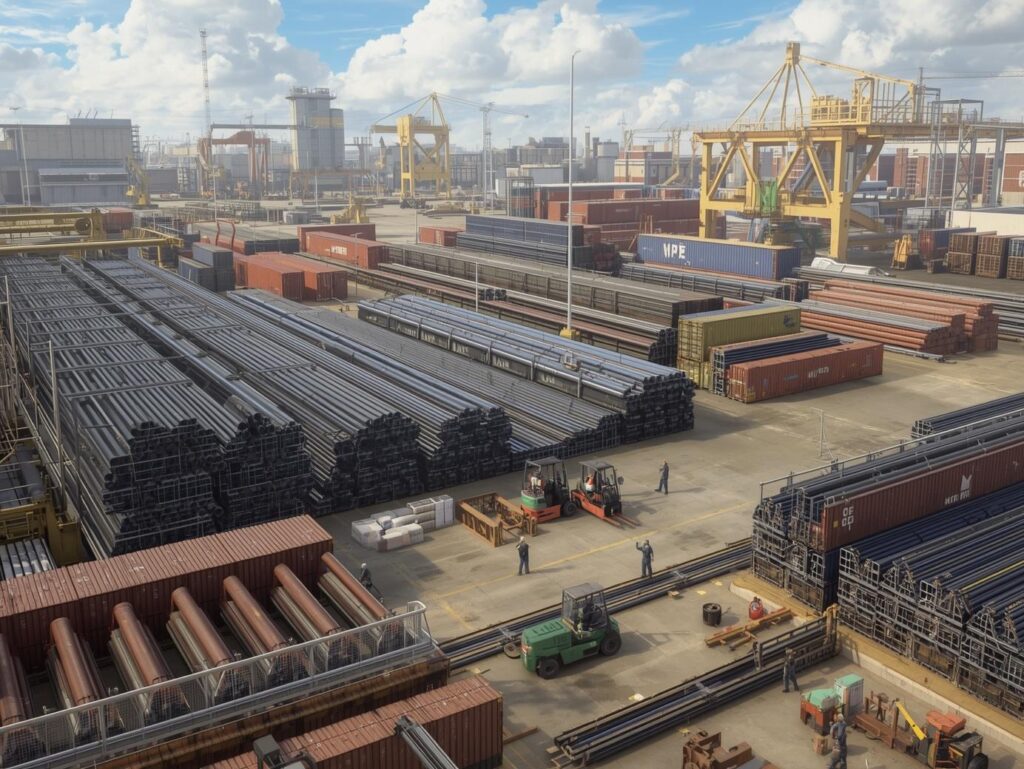
By integrating operational data—inventory levels, order flows, processing status, and historical consumption—and applying AI, demand signals can now be interpreted with significantly greater precision.
Human expertise remains central. However, AI enhances decision-making by improving speed, consistency, and predictive accuracy across the supply chain.
From Inventory Buffering to Decision Intelligence
Viewing this transformation purely as inventory optimisation risks underestimating its strategic significance.
Traditionally, trading companies created value by holding inventory, absorbing volatility, and ensuring supply continuity under uncertainty. In this model, value was embedded in physical positioning and operational responsiveness.
What is emerging now is fundamentally different.
The value increasingly lies in providing supply predictability, operational resilience, and capital efficiency across the entire chain. This includes not only ensuring material availability, but also reducing unnecessary capital tied up in inventory across both customers and suppliers.
This shift is enabled by more than technology alone. It builds on decades of accumulated supply chain management (SCM) data, industry knowledge, and operational expertise. By structuring this knowledge into AI-enabled systems, it becomes a decision asset rather than institutional memory.
In this sense, the supply chain evolves from a logistics function into a decision-making system embedded within customer operations.
AI as an Enabler of End-to-End Supply Chain Visibility
The introduction of AI into OCTG supply chains enables optimisation across previously disconnected functions, including procurement, inventory management, processing, and logistics.
By linking internal operational data with customer demand signals and drilling plans, organisations can now move towards end-to-end supply chain visibility and coordination.
This enables:
• More accurate demand forecasting
• Better alignment between supply and drilling activity
• Reduced excess inventory without increasing risk exposure
• Improved responsiveness to market changes.
Importantly, this does not remove uncertainty from the system. Instead, it improves how uncertainty is interpreted and managed through data-driven decision-making.
The supply chain becomes less reactive and more adaptive, shifting from periodic planning cycles to continuously updated decision flows.

Inventory Optimisation as Both Capital Strategy and Competitive Strategy
Inventory is not only an operational consideration—it is also deployed capital. Excess inventory ties up working capital that could otherwise be deployed elsewhere across the business. Through AI-driven planning, organisations can reduce unnecessary buffer stock while maintaining service reliability.
This has direct implications for:
• Working capital efficiency
• Return on assets (ROA)
• Return on equity (ROE)
• Cash flow predictability
However, the more significant shift is structural.
As AI models improve and integrate with customer data, supply chain planning increasingly becomes a shared decision environment between trading companies and customers. This creates a more synchronised system where forecasting, ordering, and logistics planning are aligned across organisational boundaries.
In this context, inventory optimisation becomes not just an efficiency gain, but a competitive differentiator built on decision integration.
From Moving Goods to Designing Supply Certainty
While AI technologies themselves are widely available, their application in OCTG supply chains is difficult to replicate.
This is because the model depends on:
• Deep domain expertise built over decades
• Long-standing customer relationships
• High-quality operational data across multiple markets
• Embedded execution capabilities across logistics and trading functions
In recent years, AI has been applied to real operational environments to validate its impact, including in European operations where supply chain data has been integrated into advanced analytics platforms.
By combining structured data with AI-driven logic, organisations are beginning to build systems that support decision-making at scale across complex supply networks. This is not simply a digital upgrade. It represents a shift from executing transactions to designing reliability and predictability into the supply chain itself.
Building a New Type of Supply Chain Capability
As AI becomes embedded into OCTG operations, the role of the supply chain function evolves.
It is no longer defined only by the physical movement of goods, but increasingly by:
• Predictive accuracy of demand
• Responsiveness to operational changes
• Integration with customer planning systems
• Ability to optimise capital across the value chain
This creates a new form of capability where supply chains function as intelligent systems that continuously adjust based on real-world signals.
Over time, this reduces reliance on static planning cycles and increases the ability to respond dynamically to market and operational shifts.
Strategic Implications for Integrated Trading Companies
For diversified enterprises, this transformation reflects a broader shift in how value is created in global supply chains.
The competitive advantage is no longer derived solely from scale or inventory position, but from the ability to:
• Integrate data across complex ecosystems
• Improve decision quality under uncertainty
• Embed intelligence into operational workflows
• Strengthen resilience across customer operations
This is particularly important in commodity-linked industries where volatility is structural rather than temporary.
In this context, AI does not replace traditional supply chain expertise. Instead, it enhances it by enabling faster, more informed, and more coordinated decisions across the value chain.
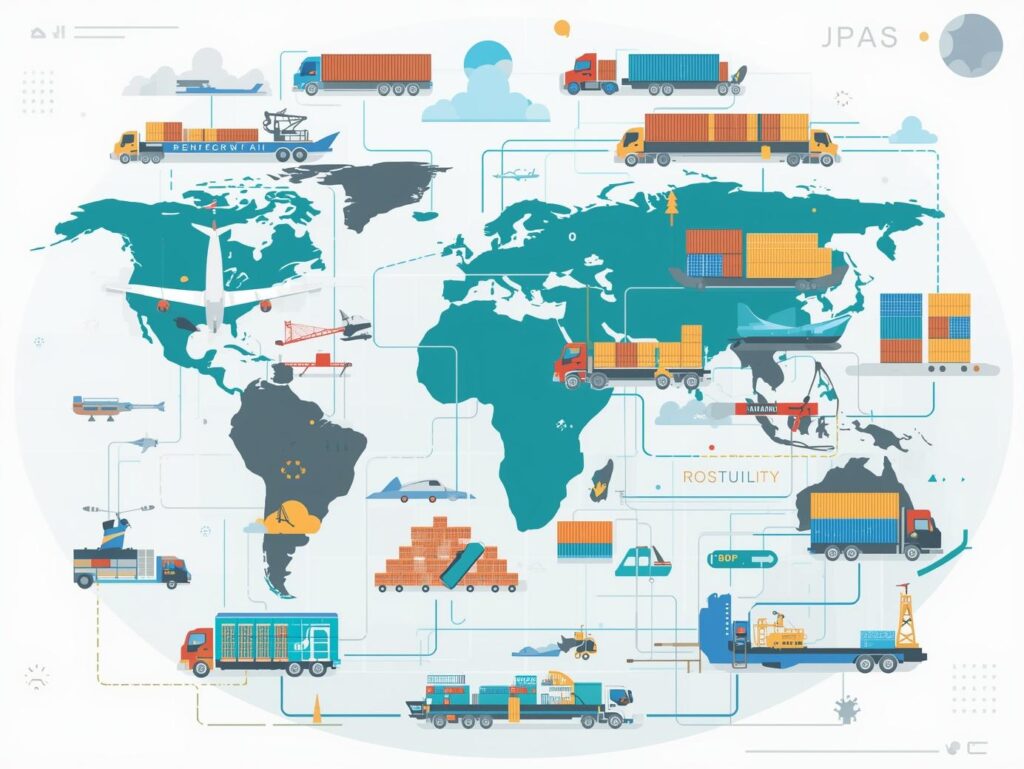
Conclusion: Redefining the Role of the Supply Chain
The application of AI in OCTG supply chains represents more than an efficiency initiative. It marks a shift toward supply chains that function as strategic infrastructure for decision-making, rather than purely logistical systems.
By connecting data, operations, and customer demand into a unified intelligence layer, the supply chain becomes a mechanism for:
• Capital optimisation
• Risk reduction
• Operational resilience
• Long-term value creation
In this sense, AI enables a transition from managing uncertainty through buffers to managing it through information, prediction, and coordinated decision-making.
Ultimately, the most significant change is not in how goods are moved, but in how decisions are made. And as AI continues to mature, the competitive advantage will increasingly lie in those organisations that can design not just supply chains—but certainty within complexity.