A Defining Moment for the Net-Zero Economy
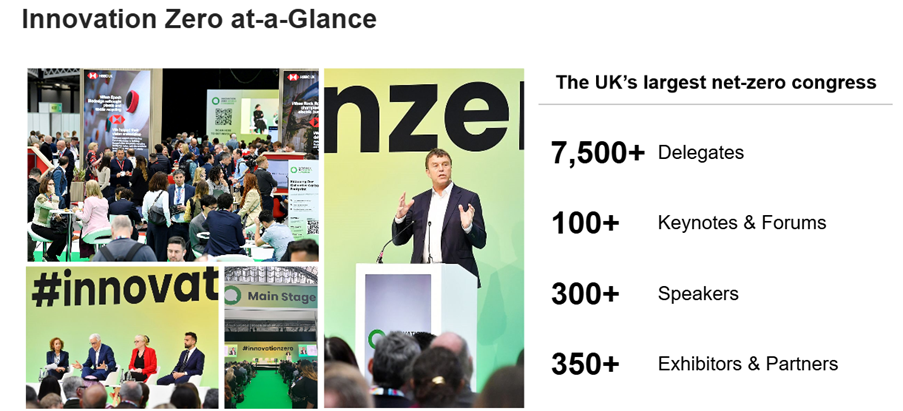
The Innovation Zero World Congress, cementing its position as the UK’s largest net-zero congress, convened 7,500+ delegates, 300+ speakers, 100+ keynotes and forums, and 350+ exhibitors and partners, all united around a single mission: accelerating the electrification, digitalisation, and industrial innovation that underpin energy security, productivity, and sustainable growth.
Spanning five interconnected themes — Energy & Grid, Built & Infrastructure, Finance & Emerging Technology, Advanced Manufacturing & Industry, and Resilient Supply Chains — the congress offered a panoramic view of how leaders across sectors are translating climate ambition into commercial reality.
Three Topics That Shaped the Conversation
1. dMRV: The Digital Backbone of Carbon Markets
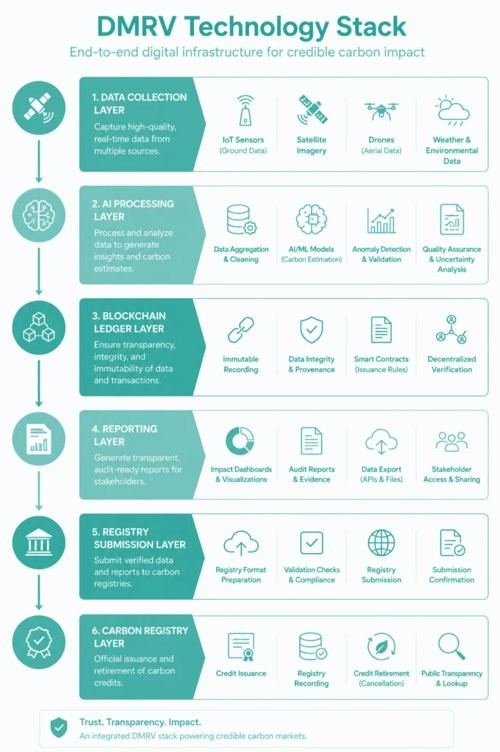
Digital Measurement, Reporting and Verification (dMRV) emerged as one of the congress’s most strategically significant themes. Far from being a compliance checkbox, dMRV is increasingly recognised as a strategic enabler — the foundation for carbon markets, trading optimisation, and AI-led insights.
Several insights stood out:
• Real-time, digital monitoring is becoming the industry benchmark, with continuous data poised to redefine asset management and carbon positioning.
• Trust and reliability will determine market winners — high-quality dMRV unlocks access to capital and premium carbon credits in an increasingly crowded field.
• Standardisation is still evolving, creating a window for early movers to shape ecosystems and avoid fragmentation risk.
• Commercial-ready solutions already exist, meaning organisations that deploy now can capture a meaningful competitive advantage.
• Integration across the value chain — energy, carbon, and data — is the true differentiator, especially for enterprises with diversified portfolios.
2. Energy Sector Data Governance
The second major thread examined how the energy sector is closing its data gaps and aligning around interoperable digital foundations.
Building decarbonization: bridging the data gap
The persistent mismatch between theoretical energy models and actual EPC performance remains a major challenge for the built environment. Real-time data and unified reporting standards are becoming critical for scalable decarbonization, while Digital Twins are emerging as a powerful tool for simulation and ROI analysis. Crucially, verifiable data is increasingly the gatekeeper to large-scale retrofitting finance.
Interoperability by design: aligning the UK’s digital energy future
Open, plug-and-play digital architectures are rapidly replacing the traditionally isolated grid-edge systems of the past. Yet the industry continues to wrestle with balancing consumer privacy against the operational visibility grid operators require. Real-time demand flexibility could meaningfully reduce the need for costly physical grid reinforcement — but only if interoperability is underpinned by cyber-resilient frameworks across the entire energy value chain.
3. Energy Infrastructure & Supply Chain
The final theme zoomed out to the physical and industrial backbone of the energy transition.
Decarbonization is shifting toward a fully integrated energy system that combines physical infrastructure with low-carbon molecules. Coordinated deployment of hydrogen, CCUS, and grid infrastructure is becoming critical for heavy industries such as steel and chemicals, where electrification alone won’t suffice.
Hybrid models — pairing surplus renewable power with repurposed gas pipelines — are gaining traction as part of a national hydrogen strategy. However, engineering talent shortages, supply chain constraints, and outdated UK planning systems remain stubborn barriers to meeting 2030 targets.

4 Key Takeaways for Businesses
If there was a unifying message across the two days, it was this: the net-zero transition is moving from ambition to execution, and the winners will be those who treat data, infrastructure, and supply chains as a single integrated challenge.
- Supply chain resilience & visibility: The success of large-scale energy projects hinges on proactive global supply chain management. Achieving dual visibility over both revenue streams and supply chains has become a strategic imperative.
- From estimates to trusted: The industry is shifting from estimated to measured data. The critical challenge is no longer data availability, but whether the data is audit-ready and trustworthy.
- Interoperability via flexible architecture: To remain adaptable amid evolving standards, systems must ensure interoperability through open APIs and flexible, future-proof digital architectures.
- dMRV is core to carbon monetisation: dMRV is becoming the core digital infrastructure of carbon markets, driving real-time asset visibility, credible credit generation, and scalable value creation across energy ecosystems.
Looking Ahead
Innovation Zero 2026 made one thing clear: the next phase of the net-zero economy will be defined less by whether we decarbonise and more by how credibly and how quickly we can prove it. Trusted data, open architectures, and resilient supply chains are no longer back-office concerns — they are the currency of competitive advantage in the energy transition.
For organisations operating across energy, infrastructure, and industrial value chains, the message is unambiguous: the tools are ready, the standards are forming, and early movers will set the rules.